

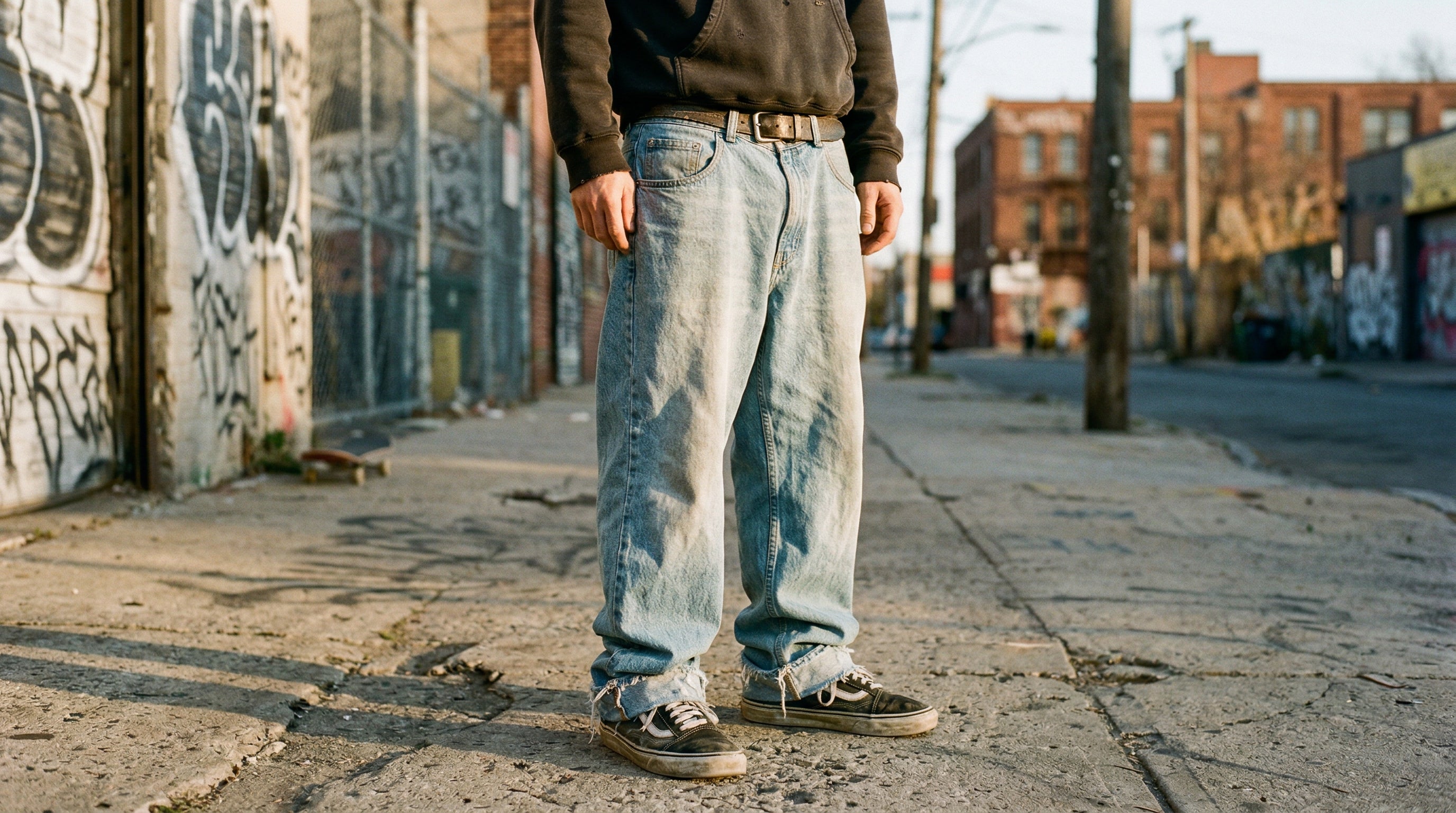
Baggy Jeans Men 90s: The 2025 Comeback
Baggy jeans men 90s are wide-cut denim pants with an oversized silhouette, born in the 1990s out of hip-hop and skateboarding culture — and back in 2025 as the strongest denim comeback of the decade.
What started out of necessity back then — big clothes for freedom of movement on the board or while breaking — is a deliberate stylistic move today. The 90s baggy jeans cut sits low, falls wide, stacks on the shoe and does exactly what no other cut can: it gives an outfit instant character.
Why the 90s baggy cut dominates in 2025
The counter-move to fast fashion and skinny overload was overdue. Gen Z opened the archives and pulled out what streetwear actually means: silhouette over everything. Baggy jeans from the 90s were never just pants — they were a statement against anything restrictive.
In 2025 the comeback is complete. No longer a niche trend — baggy denim is mainstream streetwear, from Berlin to Los Angeles. And the 90s cut is the most authentic expression of that movement. What else is shaping the current streetwear trends 2025, you'll find in the linked guide.
What defines 90s baggy jeans?
Not every wide pair of jeans is a 90s baggy cut. The differences are specific:
- Rise: low on the hips or slightly below — no high waist
- Thigh: a lot of room — material falls loose
- Knee to hem: evenly wide, no taper, no flare
- Length: long enough to stack — the hem lands on or below the shoe
- Wash: light wash, stone washed or raw denim — no bleached white
- Details: no unnecessary branding, no stuck-on patches — clean is authentic
The difference to the flared jeans cut: flared opens outwards below the knee — baggy stays evenly wide from the thigh to the floor.
The history: where did 90s baggy jeans come from?
Baggy denim wasn't born in a fashion lab — it was born on the street. Three origins, three cultures:
- Hip-hop (New York, early 90s): acts like EPMD, later Wu-Tang Clan, Tupac — wide jeans with a wide tee, Timberlands underneath. Not a fit from fashion magazines but from the block.
- Skateboarding (California): wide denim for freedom of movement while skating — functional design that became a style. Brands like Dickies and early skate labels made it wearable.
- Subversion aesthetic: sagging — deliberately wearing them low — became an expression of counterculture. Not despite the system but against it.
What counts as a trend today is originally subculture. That makes the 90s baggy cut more honest than most other denim trends. Where streetwear in general comes from is a story of its own.
Styling 90s baggy jeans for men: 4 outfits
Look 1: authentic 90s hip-hop
- Light wash baggy jeans — worn low, stacked on the shoe
- Oversized graphic tee — vintage wash, no modern clean print
- Timberland boots or Nike Air Max 95/97
- Snapback or beanie — optional, but it makes the look
Look 2: clean streetwear 2025
- Dark wash or stone washed baggy jeans
- Minimal oversized hoodie in black or off-white — see the hoodie guide
- Chunky sneaker — New Balance 990, Nike Shox or similar
- No accessory — the silhouette speaks for itself
Look 3: skater vibes
- Raw denim baggy — barely washed, indigo blue
- Fitted longsleeve or flannel shirt, worn open
- Vans Old Skool or Converse high-top
- Low-hanging bag — crossbody or tote
Look 4: premium streetwear layer
- Washed black baggy jeans
- Fitted tee, layered longsleeve underneath
- Padded bomber jacket or heavy-weight coach
- Clean leather runner or Jordan 1 Low
More on the oversized principle in streetwear outfits is explained in the linked guide.
Fit guide: how to wear 90s baggy jeans right
Baggy doesn't mean shapeless. The silhouette wants to be styled — the key points:
- Length: stacking on the shoe is part of it — but not so long that you trip over
- Waistband: low rise is allowed, not required — depends on the look
- Top: fitted or oversized — both work. Not mid-size: that's no man's land
- Belt: optional. If so, visible and statement — no hidden plastic belt
- Cuffing: turning them up leans towards a utility look — if so, clean and even
Material: what defines 90s baggy denim
- Weight: 12-14 oz denim — holds the silhouette, develops character as you wear it
- 100% cotton: no stretch — stretch denim loses shape and looks cheap
- Wash: light wash is the most authentic 90s look. Stone washed or raw are valid alternatives
- Construction: reinforced edges, clean seams — the denim has to handle stacking
BEAHATER denim — built for exactly this silhouette. No over-the-top branding, no half-baked distressing — just quality that holds the look. Shop the current drop: BEAHATER Shop.
Baggy vs. straight: which cut when?
- Baggy: statement look, maximum streetwear energy, 90s reference, chunky footwear
- Straight: versatile daily driver, cleaner look, also works in semi-formal contexts
The full cut comparison is in the guide to oversized proportions.
FAQ: Baggy Jeans Men 90s
What are baggy jeans men 90s?
Baggy jeans in a 90s cut are wide-cut denim pants with a low rise, lots of room at the thigh and an even width down to the hem. They came out of hip-hop and skateboarding culture in the 90s and are the strongest denim comeback in streetwear in 2025.
How do you wear 90s baggy jeans in 2025?
Stacking on the shoe, low rise, paired with an oversized hoodie or a fitted tee — both routes work. Chunky sneakers or boots complete the silhouette best. The principle: the top sets the tone, baggy below makes the statement.
What's the difference between baggy and loose fit jeans?
Loose fit is slightly wider than straight fit — comfortable, but not extreme. Baggy goes much further: more width at the thigh, more room overall, heavy stacking possible. Baggy is a statement, loose fit is a relaxed daily cut.
Which shoes go with 90s baggy jeans for men?
Chunky sneakers (New Balance 990, Nike Air Max, Reebok Classic), Timberland boots, Nike Dunks or Jordan 1. The wider the sole, the better the proportion to the wide jeans. Clean white sneakers give contrast and work too.
Are baggy jeans suitable for every body type?
Yes — baggy balances and structures more than it restricts. Slimmer frames gain from the silhouette, wider frames from the freedom of movement. The key is length: too short looks unfinished, properly stacked always looks strong.